


The nine workflows that decide whether a cheque becomes a return.
Hi, I’m Raffaela, and welcome to AI Leadership Edge, a newsletter for investors and business leaders who want to gain leverage with AI.
Join 13,500+ leaders, boards and GPs. Subscribe free and get The AI Edge 5-Day Crash Course. Paid subscribers get every playbook in full, plus The Executive AI Index, the Top 10 Prompting Hacks, and The AI Leadership and Boardroom Toolkit. Refer a friend and unlock the full AI Leadership Prompt Library.
The cheque cleared. Then the fund went quiet.
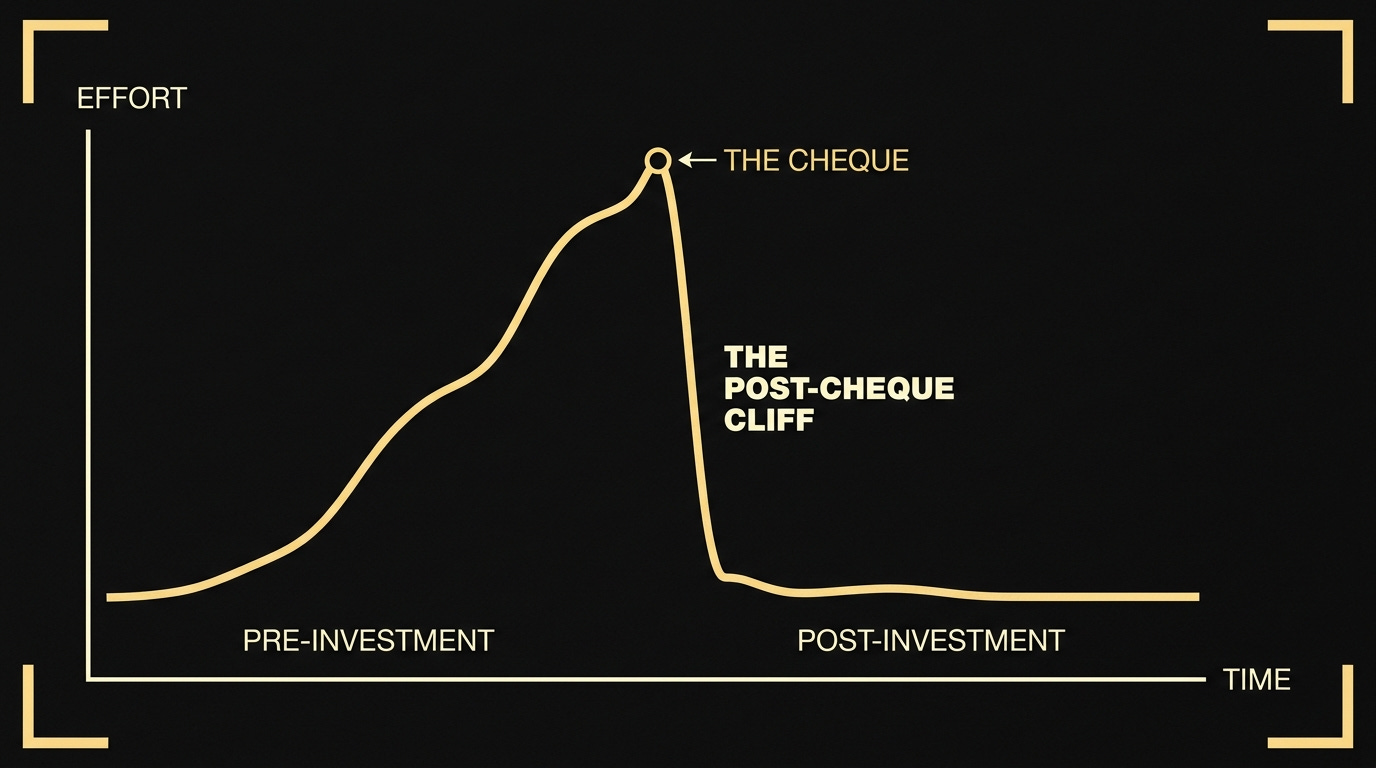
Every fund I have sat across from pours its sharpest hours into winning the deal. The diligence, the partner debate, the term sheet that beats three others. Then the wire clears, and the attention drops off a cliff.
I call it the post-cheque cliff. The reason is structural. The incentives all sit before the cheque. Nobody earns a carry bump for a well-run board meeting.
Here is the shape of the problem. A single partner can sit on 10 to 30 boards, each sending 100 to 5,000 pages per company per quarter, on top of the IC, the reserves calls, the LP requests, and the hiring decisions. After the wire clears, most of that performance still runs on PDFs, memory, and gut. And the truth about a company usually arrives one to three quarters late, when the outcome is already harder to change.
And yet more than $13 trillion sits in private markets today, growing by close to a trillion a year, and in a cycle where returns come from operating improvement rather than cheap leverage, the work after the cheque is where the return is made or lost. A one to two percent improvement on that base is $130 to $260 billion left on the table.
Here is what nobody puts in the minutes. Pre-investment is a beauty contest. Post-investment is the marriage, and it is the least favorite, most neglected part of the job precisely because the glory lives before the deal closes. The board seat, the monitoring, the follow-on, the exit: that is the marriage, and it is where capital turns into outcomes.
Pre-investment decides what you own. Post-investment decides what it becomes. Most funds spend everything on the wedding and improvise the marriage.
Whether you sit on two boards or carry a portfolio of thirty, the shape of the work is the same. I call it the Post-Investment Map: nine workflows across three phases that turn a cheque into a return. The whole game is spending your scarce attention on the 10% of moments that actually change outcomes, and running the other 90% as a system so it does not eat your week. Below is the map, what each workflow is for, what good looks like, and where the return leaks. The first phase is free. The rest is for paid subscribers.
Why the middle is where funds win or lose
Most funds run the first ninety days on instinct and the exit on adrenaline, and treat everything in between as admin. That middle is the mistake. The onboarding sets whether the founder takes your call. The monitoring decides whether you see trouble while you can still help. The follow-on decides whether you keep your winners. Run the middle as a system and the ownership compounds. Run it ad hoc and you are a name on a cap table, hoping the exit bails you out.
One frame before the map
Read this through your own seat. An independent director runs this on one board, to govern well and protect a good name. A fund-appointed director or a GP runs the same map across the whole portfolio, where the mandate is value creation as well as oversight, the exposure runs to LPs as well as shareholders, and the “chair” may be the lead partner or the IC. Independent directors run it once. GPs run it thirty times, and the leverage is in seeing the same pattern across all of them at once. The workflows are the same. What you do with them is not.
Phase one: the first 90 days (free)
The first ninety days set the operating model for everything that follows. Get them right and the rest of the map runs on rails. Get them wrong and you spend the next five years fixing a relationship you could have set up in two weeks.
1. Onboarding and the operating cadence
The wire is not the close. The close is when the countersigned docs, the updated cap table, the board consent, and the wire confirmation all sit in one place both sides can see. Then, inside the first two weeks, you set the operating model while everyone is still saying yes.
What good looks like: a single one-page operating agreement, written in the first two weeks. Who the point partner is. How often you speak, and in what format. The one metric you and the founder will both watch. What the founder wants from you, and, just as important, what they explicitly do not. Run a quick ownership audit while you are there: for every domain where you and the founder are both loosely responsible, name one owner. If you cannot, that is your first gap.
The red flag: you cannot name the one metric this company lives or dies on, or the founder could not name what they want from you. The founders who feel abandoned by month three are almost always the ones where nobody set the cadence on day one.
Boardroom takeaway: set the cadence before you need it, because you cannot install it in a crisis.
2. The board seat and its rhythm
Confirm the seat or the observer right, then use it well. This is the instrument you will govern and create value through for the life of the investment, so treat it as a standing operating role, not a quarterly appearance.
What good looks like: a set cadence, quarterly for most early-stage companies and monthly only when the company is moving fast in either direction. Your information rights written down and actually exercised, so you see more than the polished pack. Your pro-rata logged where you will see it before the next round, not after. For a fund-appointed director, the “chair” is often the lead partner or the IC, and the mandate runs past oversight into value creation, so the seat is also your listening post for what the portfolio needs.
The red flag: the fund that forgets its pro-rata and watches its best company mark up without it. A board that only shows up to approve the minutes is not a board. It is an echo.
Boardroom takeaway: govern from a standing role, not a quarterly cameo, and never let your rights go unused.
3. Reporting and the data spine
Decide the update format before the first one is due, or you will get a different shape every month and be unable to compare anything. This is the workflow that decides whether the truth reaches you on time or one to three quarters late.
What good looks like: one monthly founder update in a fixed shape, so month three is comparable to month one. The metric that matters, cash and runway, the wins, the one hard thing, and the specific ask. Give the founder a template so it takes twenty minutes, not two hours, because an update that is expensive to write is an update that stops arriving. One clean system of record, not fifteen inboxes and a memory.
The red flag: every company reports in its own format, so nothing is comparable, and you learn about trouble a quarter or two after it started, when it is already harder to fix.
Boardroom takeaway: make the update cheap to send and consistent to read, or the truth will reach you late.
🔒 Below the paywall, the value-add engine, the stewardship layer, where AI belongs on this map, and the far-side-of-the-cliff play:
→ Phase two: the value-add, where you earn the ownership (talent, introductions, follow-on)
→ Phase three: the stewardship, where you protect the return (monitoring, LP marks, the exit)
→ Where AI belongs on this map, and the one thing a tool must prove before you trust a number
→ The one-page version: the whole map as a single operating rhythm
Upgrade to read the full playbook”
Paid subscribers also get The Executive AI Index, the Top 10 Prompting Hacks, and The AI Leadership and Boardroom Toolkit, plus every playbook in the series in full.
Many directors and GPs expense this as professional development.
💭 Remember!
As a premium subscriber you get access to every playbook in this series. The 5 most worth reading alongside this one:
1️⃣ The top 1% AI Playbooks for Leaders, GPs and Boards Read here ->
2️⃣ The Top 10 Prompting Hacks for Leaders, Investors and Boards Read here ->
3️⃣ AI: A tool that thinks for you, or a tool that makes you think? Read here ->
4️⃣ How to track AI productivity Read here ->
5️⃣ Build your own chief of staff with AI. Save $160,000 and 10 hours a week. Read here
🗣 Or invite a friend and earn rewards along the way:
→ 3 friends = 1 month free
→ 5 friends = 3 months free
→ 25 friends = 6 months free
Over 13,500 leaders, boards, fund managers, and sponsors are already inside.
