


Hi, I’m Raffaela — and welcome to AI Leadership Edge for leaders, investors and boards. Make AI your advantage. Turn capital into outcomes.
Join 13.000+ leaders, boards and investors. Get free access to exclusive benefits such as our Top 10 Prompting Hacks and the AI Leadership Prompt Library.

As enterprises rush to deploy AI agents, the biggest risk is whether they behave safely across the constantly changing, messy, high-stakes edge cases of production.
Chronicle Labs gives teams a staging environment for enterprise AI agents, using operational data to replay production-like scenarios, uncover failure modes, and stress-test new agent behavior before launch. Find out more at chronicle-labs.com.
In this must-watch TED talk, Microsoft researcher Advait Sarkar puts the question: What would you rather have:
A tool that thinks for you, or a tool that makes you think?
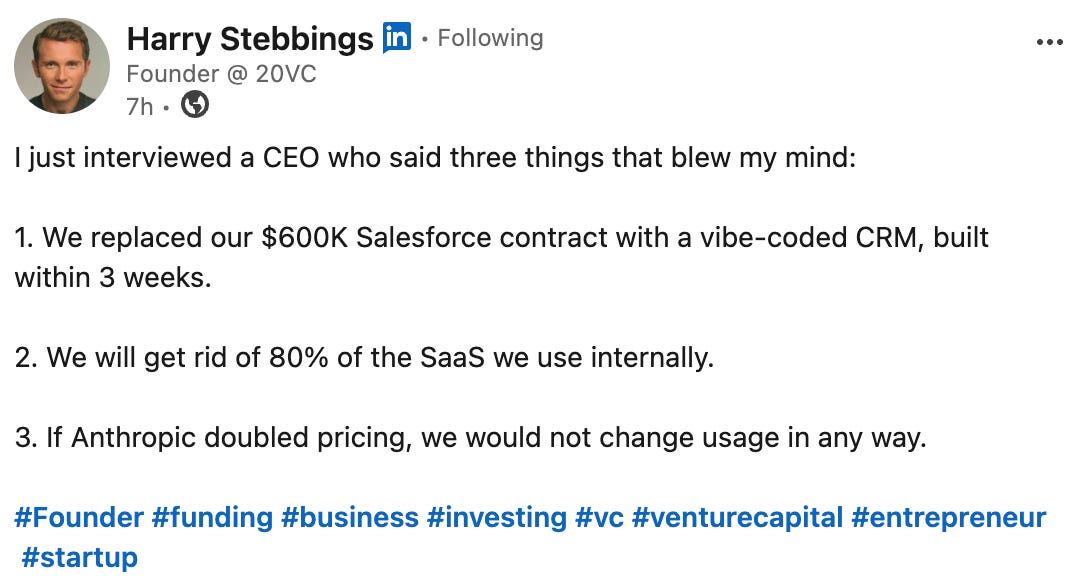
Most knowledge workers today aren’t using AI as a tool. They’re outsourcing thinking itself. Summarise the inbox. Draft the report. Analyse the data. Build the deck. Vibe-code the prototype. Approve, approve, approve.
“I’ve become a professional validator of a robot’s opinions.”
Teams using AI assistants generate a narrower range of ideas than teams working manually. When AI writes for us, we remember less of what we wrote. When we read AI summaries, we remember less than if we’d read the document. Critical thinking drops, and it drops most when we trust AI more than we trust ourselves.
“We’ve become middle managers for our own thoughts.”
“It’s like we invented a cure for exercise and then wondered why we’re out of breath all the time.”
This newsletter grows from your shares. I want to help a million people use AI right. Sharing keeps your articles free & helps me stay laser focused on mastering AI for you.
Leaders, directors and investors are paid for judgement. That is the job. The hours in board packs, founder calls and audit committees are the most expensive judgement work in any organisation. Outsource the thinking that builds that judgement, and you are not gaining leverage. You are erasing your own edge.
Sarkar’s alternative is not less AI. It is a different kind of AI. He calls them tools for thought: systems that provoke, challenge, surface alternatives and counterarguments. Not systems that autocomplete your reasoning.
“AI should challenge, not obey.”
Beyond getting us to the right answers, a tool for thought helps us ask the right questions.
That is the leadership choice in front of every one of us in 2026. We will all use more AI. The only question is whether we use it to think harder or to think less. The leaders who keep their cognitive muscles in the work, who treat AI as a provocation engine and not a substitute brain, will steadily pull ahead.

1. It always comes back to network effects Investor Michael Mignano argues that AI agents are about to make “systems of record” indefensible as moats. Agents can systematically extract data from any CRM, social graph or model, making data portability trivially easy. The one thing they cannot replicate is a live, active user base generating fresh interaction data. In an agent-first world, network effects become the only durable competitive advantage. Everything else can be scraped, distilled or migrated. Read Mignano on X →
2. Anthropic files for IPO. The filing comes after Anthropic raised $65 billion at a $965 billion valuation, pushing it above rival OpenAI—which is also planning an IPO but hasn’t filed yet. Details are still scant for now. Read more —>
3. Network is the new data: AI-powered relationship intelligence drives alpha One of the most-discussed sessions from the Virtual DDVC Summit 2026- The argument: venture is a people business, and the firms that started measuring their network years ago have an advantage now. For most funds, the network may be the single largest unbooked asset on the balance sheet. Watch the panel →
4. Is the boardroom the last line of defence in AI? China is not forgoing governance to accelerate AI development; it is integrating governance into its industrial strategy. China treats governance as alpha. Algorithm registry requirements, generative AI regulations, content controls and security review obligations both constrain and enable, standardising deployment and shaping domestic competition. The United States, by contrast, sits in strategic ambiguity, which carries a real cost for public companies and institutional investors trying to price AI risk. If governments do not constrain or cannot decide, is the boardroom the last line of defence when it comes to AI governance and hard AI decisions? Read the piece →
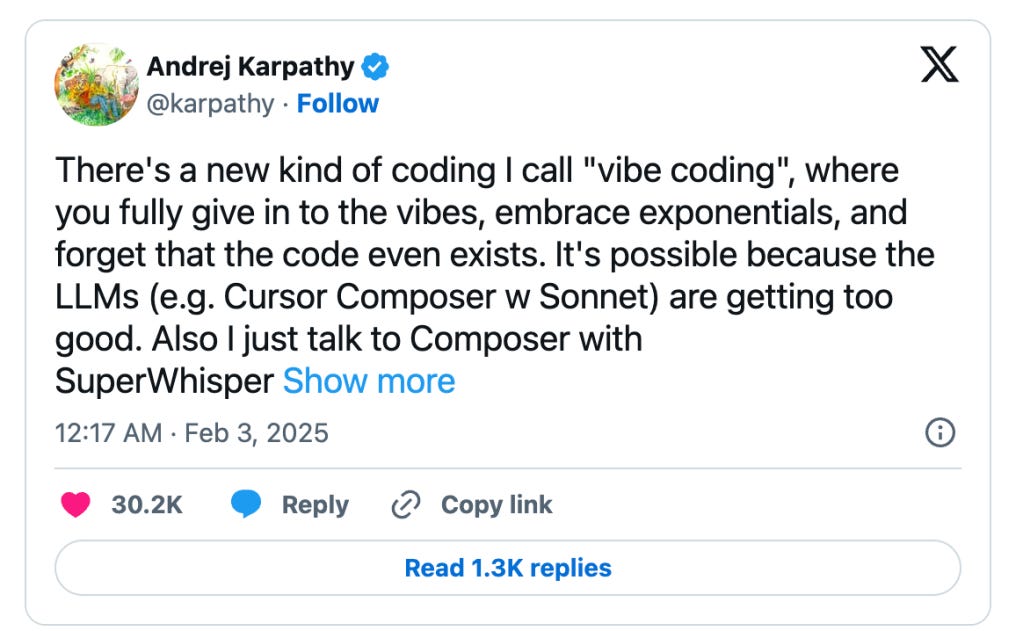
5. The talent signal: Karpathy joins Anthropic Andrej Karpathy, OpenAI co-founder, one of the most respected AI researchers on the planet and creator of the term vibe coding, has joined Anthropic. He is not the only one. Several CTOs of billion-dollar companies have joined Anthropic over the past year, namely the CTOs of: Workday (March 2026), You.com (March 2026), Instagram (January 2026), Box (December 2025), Super.com (July 2025) and Adept AI (January 2025). Not to lead divisions. But to do research. In investing, the most reliable signal is often where talented people put their time and willingness to absorb personal cost.
6. $4.4 trillion in AUM lands in Abu Dhabi in 60 days Eight global asset managers registered through ADGM in a 60-day window: Capital Group ($3.3T), Barings ($481B), Man Group ($228.7B), Bain Capital ($225B), Hillhouse ($100B+), Muzinich & Co ($30.5B), Rokos Capital Management ($22B) and Hashed Global Management ($324M). ADGM’s Q1 2026 numbers tell the structural story: 57% growth in AUM year on year, 13,353 active company licences, 961 new licences in Q1 alone, 263 investment funds managed from ADGM (+43%). For 50 years, global finance had four homes: London, New York, Geneva and Singapore. Abu Dhabi is now competing seriously for the fifth seat, on a regulatory framework built for 2026 and proximity to Gulf sovereign capital, MENA, Asia and Africa. Read more in Gulf News →
7. SpaceX IPO, governance defects boards should price in SpaceX is heading towards what could be the largest IPO in history ($75bn raise at a $2 trillion valuation). Harvard Law professors Lucian Bebchuk and Kobi Kastiel warn the governance structure is fundamentally flawed. Musk’s dual-class shares let him maintain absolute control while reducing his equity stake to as little as 9%. The structure is perpetual with no sunset clause, meaning Musk (or an heir) could retain control indefinitely even if no longer fit to lead. Boards considering SpaceX shares should price in the governance defects, not just the growth prospects. Read the analysis →
8.Opus 4.8 is here. It's more natural to talk to, gives you clearer answers, and writes better. It asks when it's unsure, and says no far less often. Switch to it anytime from the model menu.
Refer a friend and get the Executive Meeting Toolkit: 5 frameworks for the meetings you run every week. [Refer a friend →]
Jobs of the week
Head of International Applied AI Architecture, Partnerships - Anthropic, London
Board Member, Red Swan Digital Real Estate, Remote
Managing Director, Civic Innovation and AI, The Rockefeller Foundation, NYC
Managing Director, Responsible AI Lead, EMEA, Ankura, London
Managing Director, AI Value Creation Strategy, Cerberus Capital, NYC
Executive Director: AI for Agriculture & Sustainability, The Chronicle Of Higher Education, Inc., UAE
If you’d like us to include your jobs in the next issue for free, message us here
Subscribe for the weekly playbook on building a durable edge in 2026.
Paid subscribers get a premium deep dive every Thursday plus the AI Boardroom & Leadership Toolkit.
Most subscribers tax deduct or expense this as personal development.
💭 Remember!
As a premium subscriber you get access to every playbook in this series. The 5 most worth reading alongside this one:
1️⃣ The Top 10 Prompting Hack for Leaders, Investor and Boards Read here—>
2️⃣ The AI Stress Test Every Leader Should Run Read here—>
3️⃣ Build your AI Board: Your Personal Advisory Team of Warren Buffett, Elon Musk & Jensen Huang Coming up —>
4️⃣ How to track AI productivity Read here—>
5️⃣ Build your own chief of staff with AI. Save $160,000 and 10 hoursa week. Read here—> Coming up
🗣 Or you can always invite a friend and earn rewards along the way:
→ 1 friend = Executive AI Meeting Toolkit
→ 3 friends = 1 month free
→ 5 friends = 3 months free
Over 13.000 leaders, board directors, fund managers, and sponsors are already inside.
A thanks to our partners:
BoardLens The AI super analyst for fund partners and board directors.
Chronicle Labs Find and stress test agent failures before your customers do.
Ai4 2026 Join 12,000+ peers at Ai4 2026 on August 4-6 in Las Vegas. Register now
I like the distinction between a tool that thinks for you and one that makes you think. I wonder if the deeper boundary is authorship.
AI can challenge assumptions, organize complexity, and surface alternatives without taking ownership of the person’s meaning, intention, or action. The danger begins when its framing becomes so fluent that the human starts choosing inside the model’s interpretation without noticing it.
What signals or design choices could help a leader recognize when useful provocation has crossed into substitution?