

How understanding AI's blind spots can make you a better decision-maker
Explore the blind spots of AI, the shift from UX to AX, and how GPT-5 is reshaping business operations.

AI's blind spots can make you a better decision-maker
AI can weigh in on virtually every business decision we make—but when should we listen to the machines, and when should we trust our instincts?
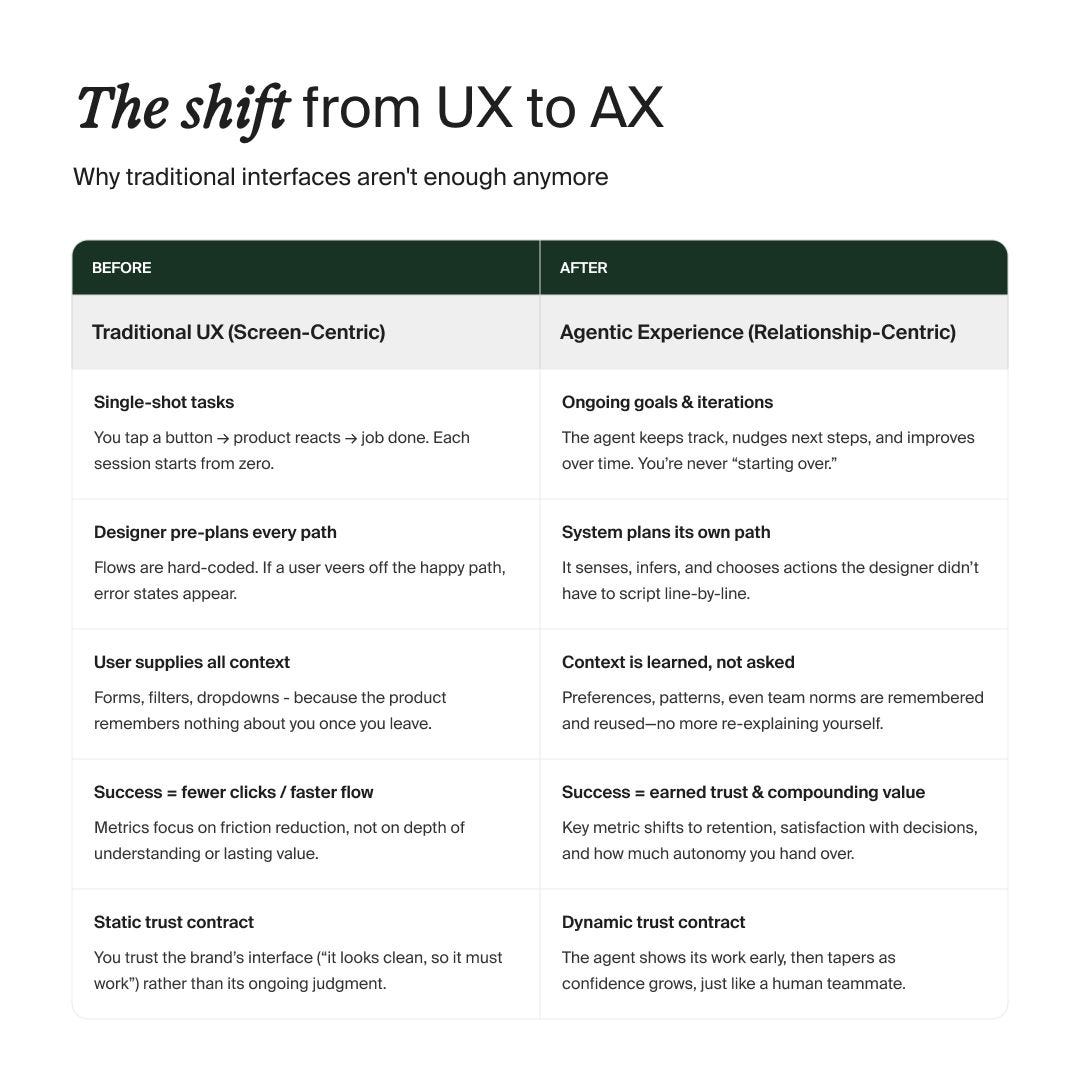
The Shift from Traditional UX to Agentic Experience (AX)
What was once considered cutting-edge—clean flows and intuitive interfaces—is now expected. Users want more than just usable tools; they want software that learns, adapts, and anticipates their needs. This shift is happening now, driven by intelligent systems like ChatGPT, which have reset the baseline for what “smart” software feels like.
We’re moving from screen-centric UX, where every session starts from zero, to relationship-centric AX (Agentic Experience), where products act as competent collaborators. AX systems learn from interactions, remember user preferences, and make decisions on their own—creating more value the longer they’re used.
The future of software will focus on earned trust and continuous improvement, not just task completion. Companies that embrace AX today will lead tomorrow’s market. Traditional UX feels outdated once you experience the true power of AX. The companies building AX now will define the next decade.
GPT-5 Is Here: What Business Leaders Need to Know
OpenAI’s GPT-5 has officially launched, offering major advancements in logical reasoning, multi-step problem-solving, and faster, more accurate responses across text, image, and audio inputs. Early tests show significant improvements in factual accuracy and long-context retention, which could be game-changing for industries like legal, scientific, and project management.
However, the rollout has been rocky, with issues like misleading benchmarks and performance hiccups. OpenAI temporarily reverted to GPT-4o for some users while working on fixes. For business leaders, the key takeaway is that cutting-edge AI can transform operations—but it’s crucial to monitor its real-world performance, plan for potential glitches, and ensure stable delivery before fully integrating it into your workflows.
"AI needs you to do the work first to form your own opinion so you can guide it in the right direction." This was a good lesson for me to learn. Thanks for sharing the article and your thoughts!